FULL-STACK
AllBlue Defense
Security is getting faster.
In 2026, frontier AI systems are becoming materially more capable at vulnerability discovery and cyber operations. The defensive side has to move just as quickly.
I built AllBlue Defense to turn CISA's authoritative catalog of vulnerabilities already exploited in the wild into something more personal and actionable: follow the software you depend on, see when exploitation is confirmed, and keep what matters in view.
01Signal
From public feed to personal signal
CISA maintains the source data. AllBlue adds the product layer around it.
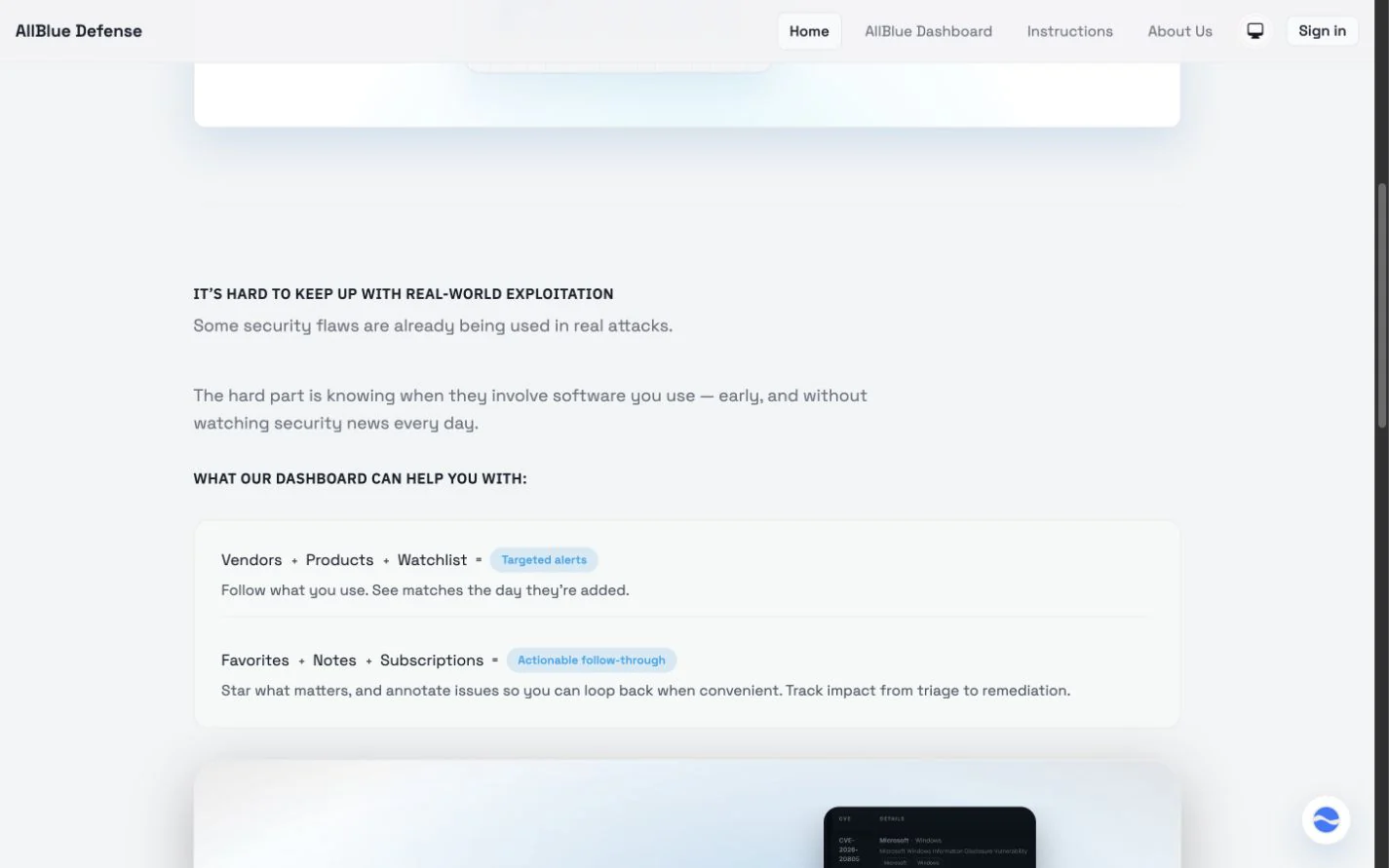
Instead of monitoring an entire vulnerability feed, users create a watchlist around the vendors and products they actually use. The question changes from “What is being exploited?” to “Is anything I depend on being exploited?”
Vendors + Products + Watchlist → Targeted alerts
02Before signup
Understand it before you use it
A security product should not require security expertise to understand its value.
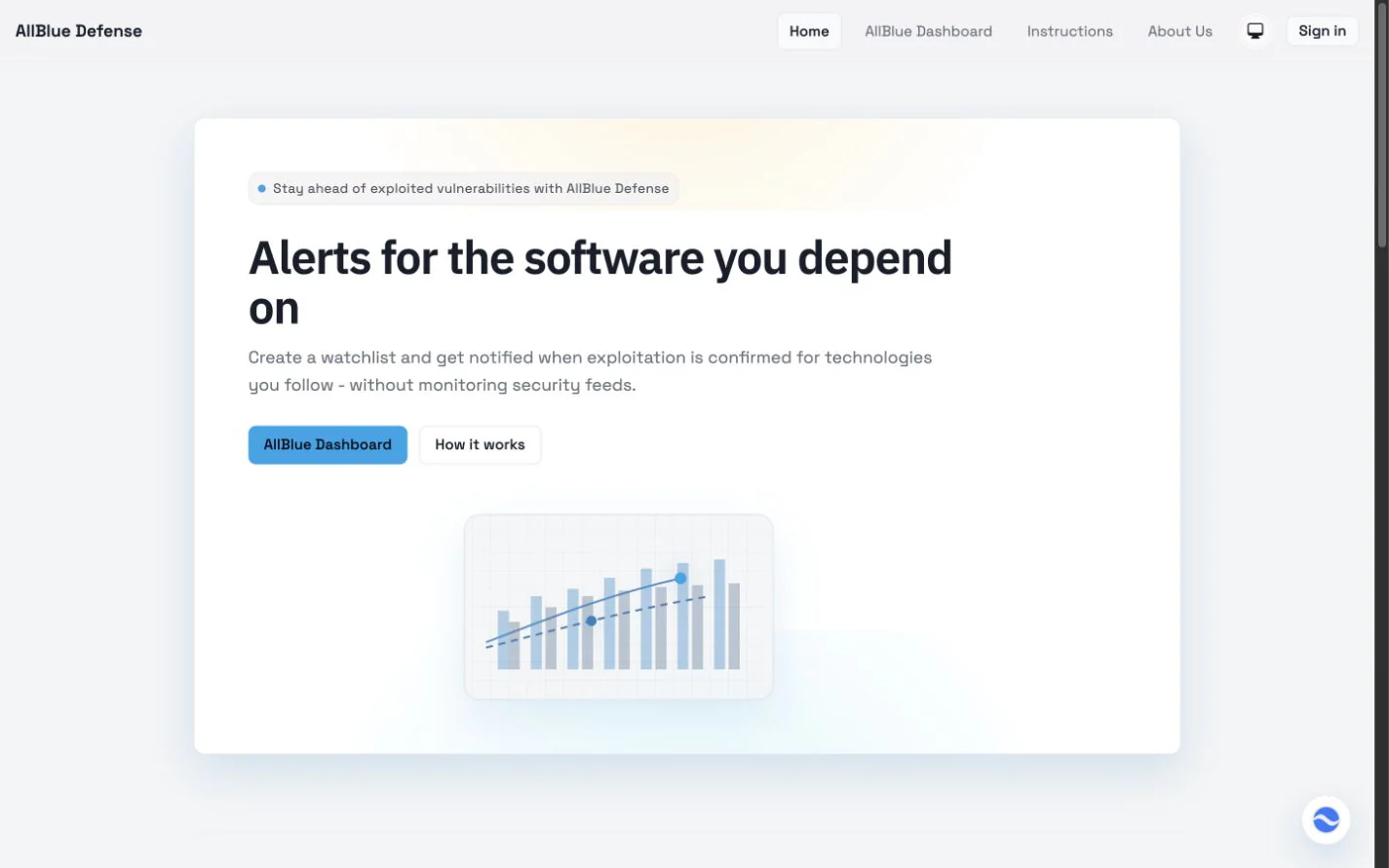
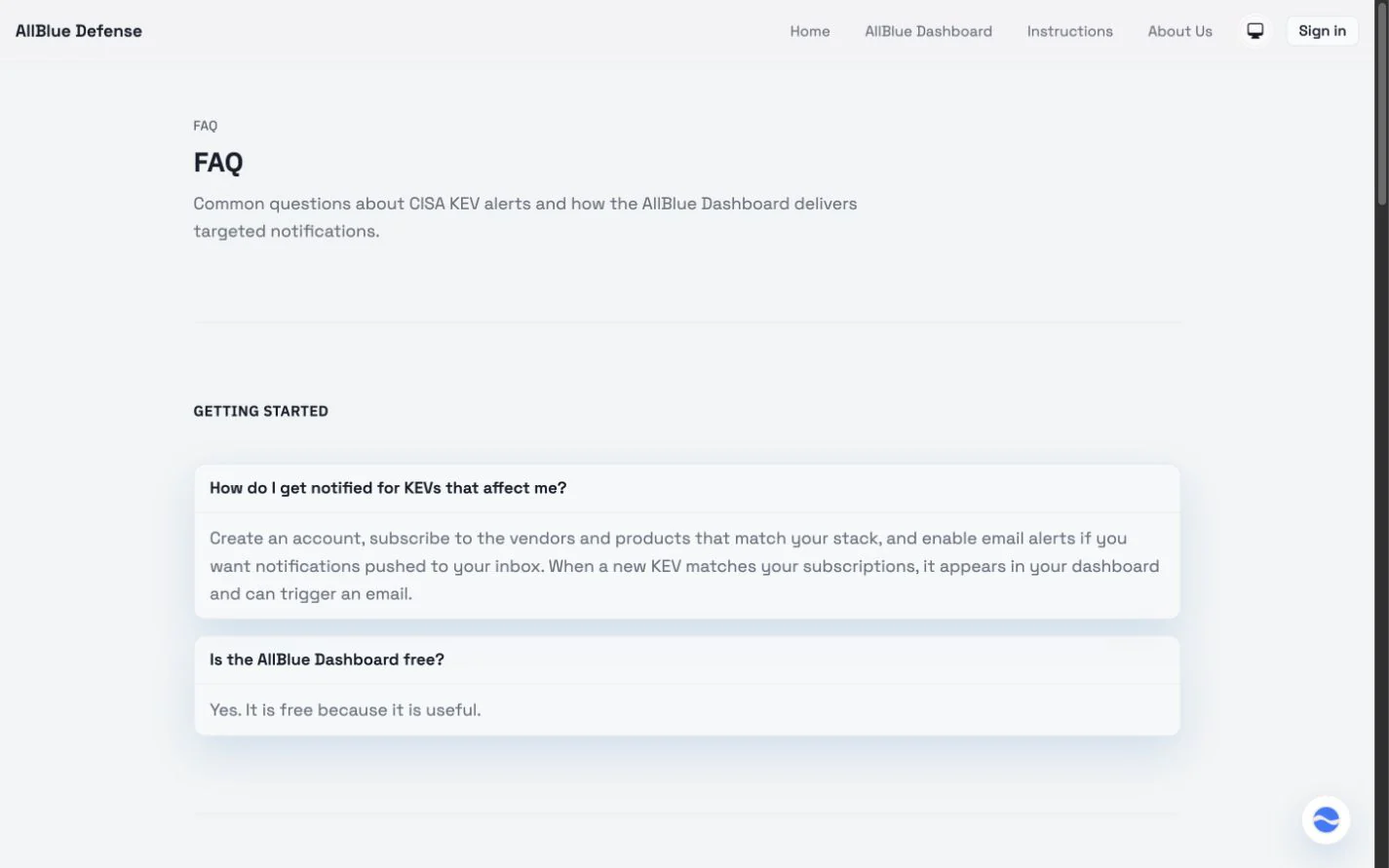
The public experience is part of the SaaS itself: a focused homepage, supporting explanations, instructions, FAQ, and privacy information teach the workflow before signup.
The onboarding starts before the account does.
03Interface
One dashboard. Many ways into the data.
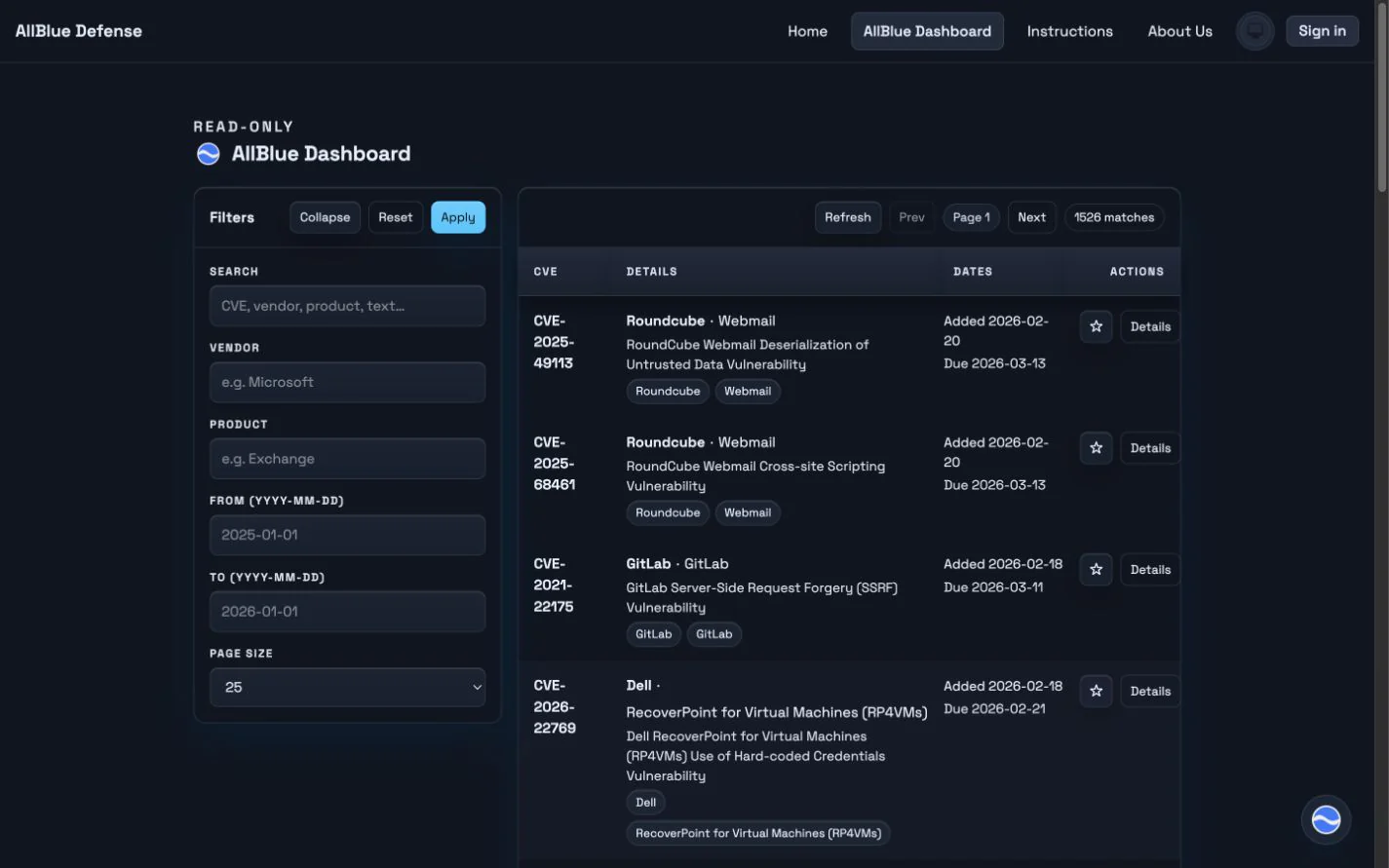
The vulnerability catalog is information-dense. The interface does not have to feel that way.
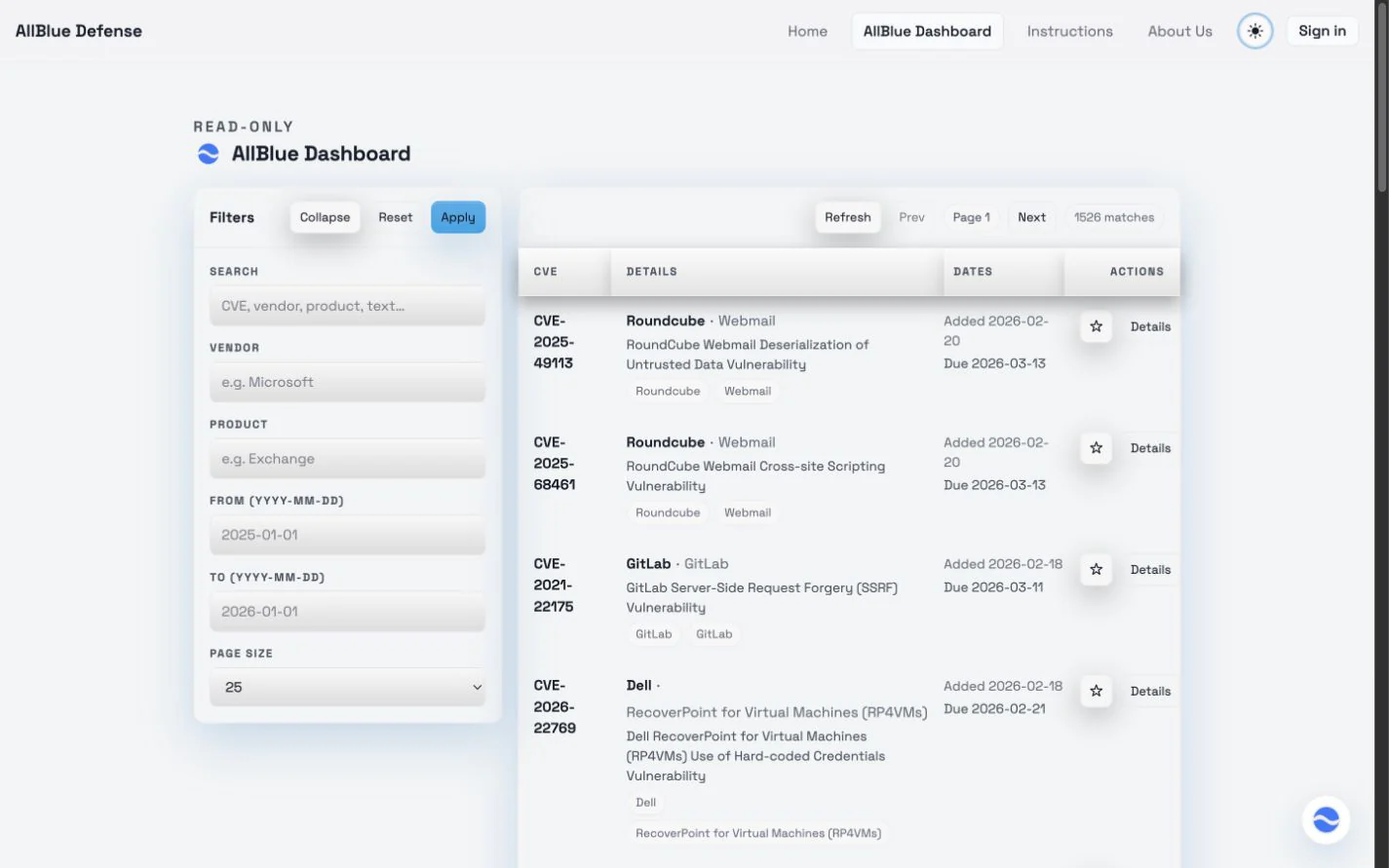
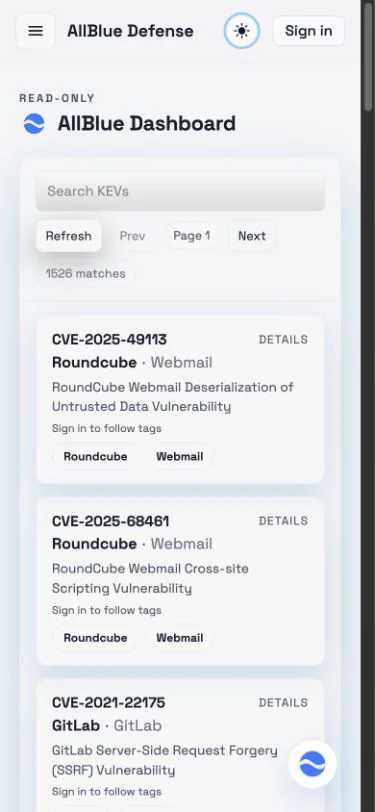
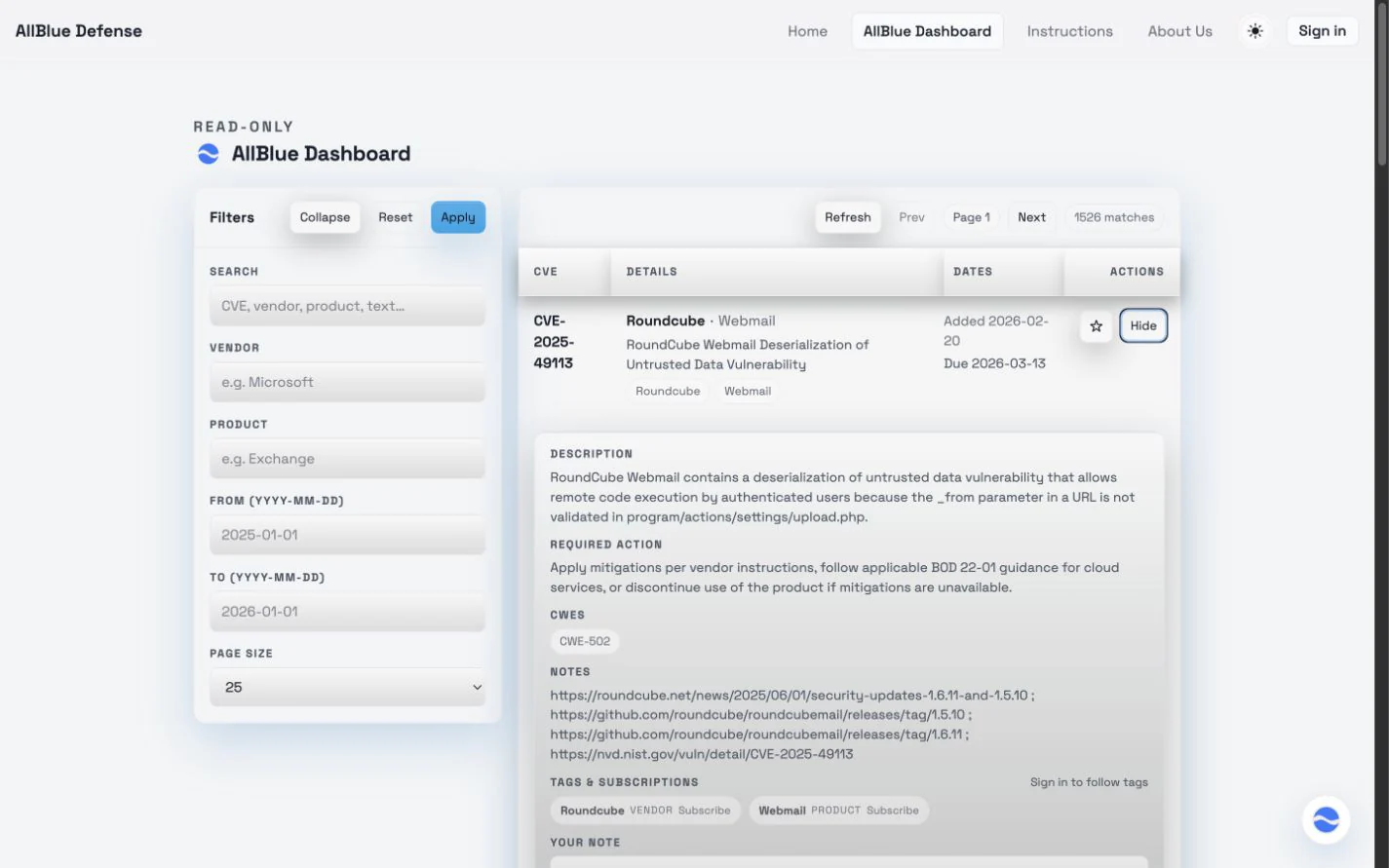
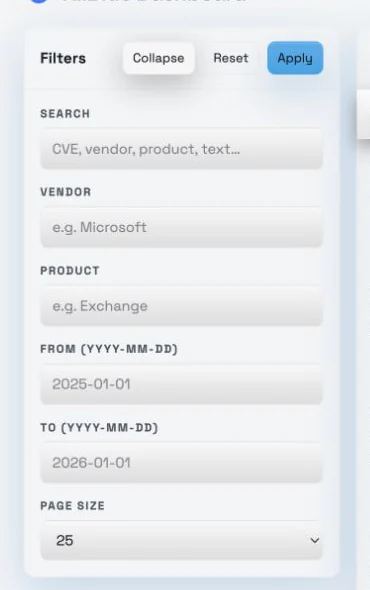
Search, filtering, sorting, and detail views move users from scanning the catalog to investigating one vulnerability without changing tools. Desktop uses space for density. Mobile turns that density into sequence.
- Search
- Filter
- Sort
- Detail
04Persistent state
The data remembers what matters to you
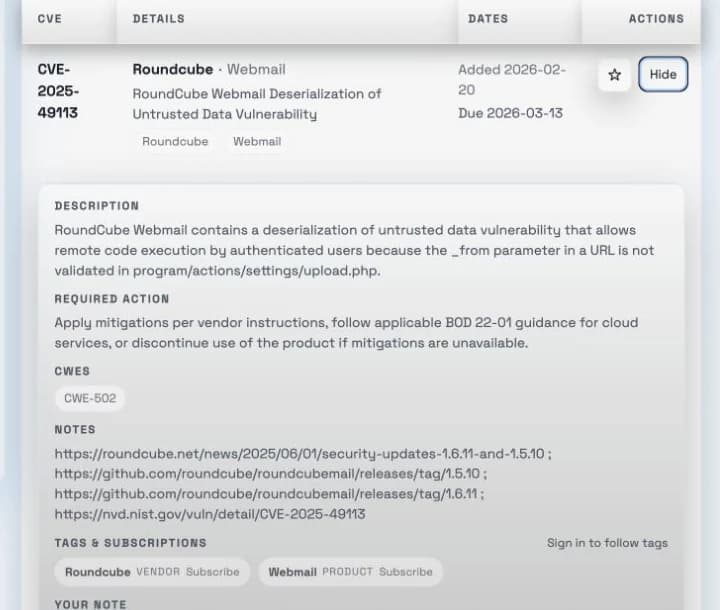
Once signed in, browsing becomes a persistent workflow.
- Subscribe
- Follow vendors and products.
- Favorite
- Keep important vulnerabilities in view.
- Annotate
- Preserve context beside the vulnerability.
- Get alerted
- Let new matching exploitation come to you.
follow → match → review → act → remember
05Product guidance
Teach without getting in the way
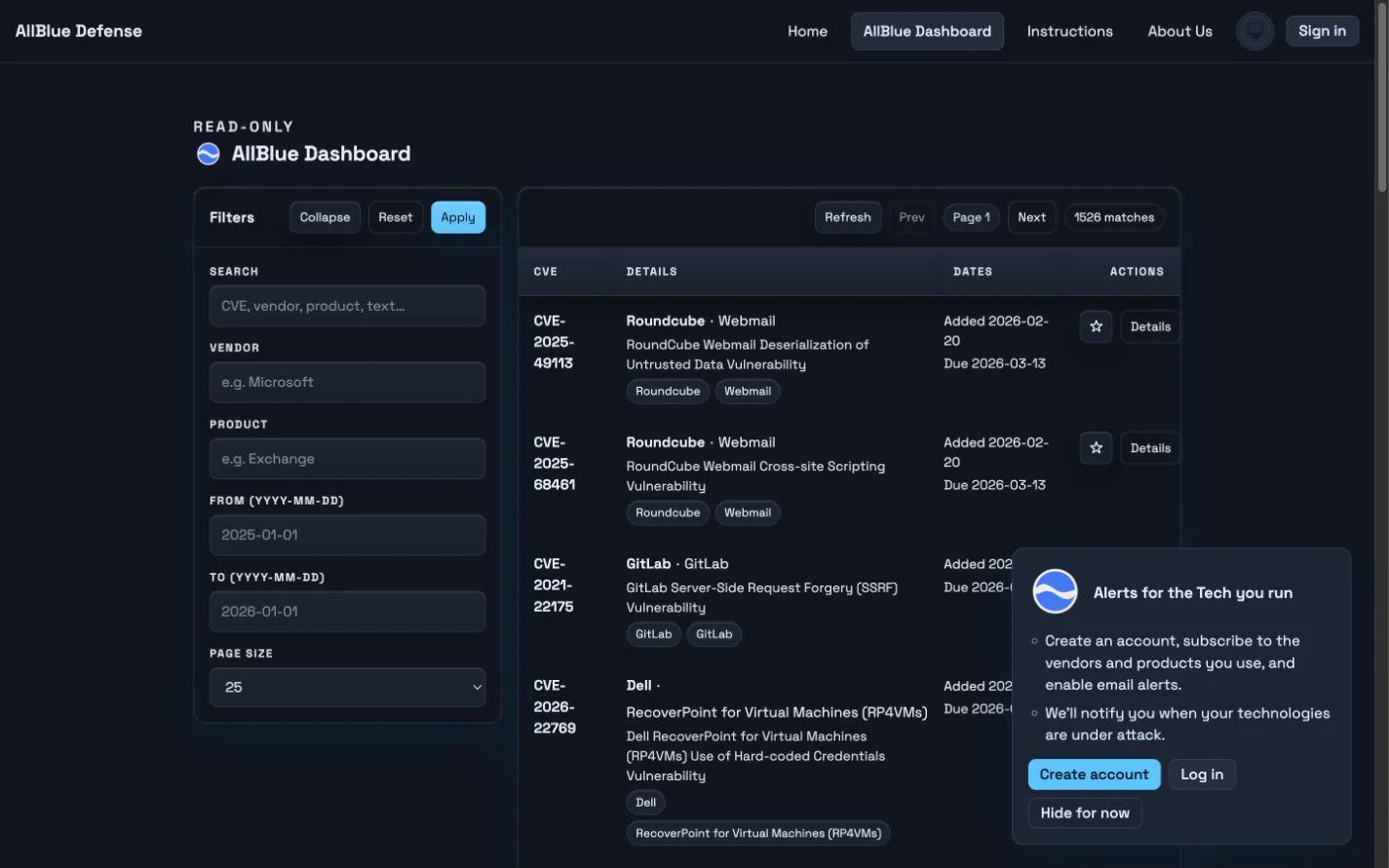
A watchlist becomes useful only after users tell the product what they care about. That makes onboarding part of the product design.
The guide teaches subscriptions, alerts, favorites, and notes inside the application, while users can already see the dashboard those features belong to.
06Full stack
The interface is only the visible half
AllBlue integrates CISA vulnerability data into its own backend, then layers application-specific behavior on top of it.
The public catalog remains the authority on exploited vulnerabilities. AllBlue turns that data into an application with accounts, persistent user state, personalization, and notification behavior.
The complexity stays behind the interface.
- 01CISA KEV
- 02AllBlue application layer
- 03Search + vendor/product relationships
- 04User watchlists + favorites + notes
- 05Targeted alerts
07Outcome
From concept to product.
AllBlue Defense is the full-stack work I want to demonstrate: identifying a useful product, integrating a real external data source, designing the application model around it, building authenticated backend behavior, and carrying that thinking through the responsive interface and onboarding experience.
The individual features matter.
The product is how they fit together.
Explore AllBlue Defense Back to portal